The Problem McLean Solved: A World of Inefficiency
It’s easy to take for granted the sight of massive, uniform metal boxes stacked high on cargo ships, rumbling down highways on semi-trucks, or lining railway tracks. These unassuming behemoths, known as shipping containers, are the unsung heroes of global commerce, facilitating the movement of virtually everything we consume. Yet, for the vast majority of human history, global trade was a far slower, more chaotic, and significantly more expensive affair.
Before the advent of the standardized shipping container, goods were transported in a bewildering array of shapes and sizes: wooden crates, barrels, sacks, and individual boxes. Imagine the scene at a bustling port in the mid-20th century: dockworkers laboriously unloading hundreds, if not thousands, of disparate packages from a truck, item by item, only to re-load them onto a ship, again piece by piece. This process was not only incredibly time-consuming and labor-intensive but also prone to damage, theft, and bottleneck delays. Each transfer point – from factory to warehouse, warehouse to truck, truck to port, port to ship, and then the reverse at the destination – introduced significant friction. The sheer inefficiency limited trade volumes, inflated costs, and slowed economic growth, making many goods prohibitively expensive or simply unavailable in distant markets.
The Birth of a Revolution: Malcolm McLean's Vision
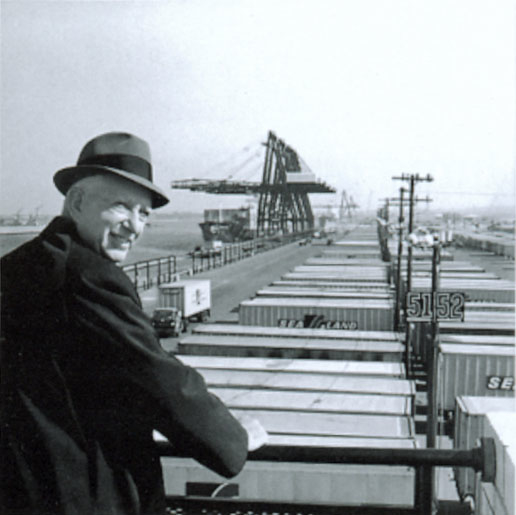
The visionary behind the modern shipping container was a North Carolina trucking magnate named Malcolm McLean. Observing the cumbersome process of loading and unloading goods from his own trucks onto ships, McLean grew increasingly frustrated with the inefficiencies. He saw his employees wrestling with various-sized wooden crates and cases, each transfer chewing up precious time and resources. His trucking company, McLean Trucking Co., thrived on speed and efficiency, but ocean shipping remained an exasperating choke point.
McLean's core insight was simple yet profoundly transformative: what if the entire truck trailer, or at least its cargo compartment, could be lifted directly onto a ship without needing to unload its contents? This idea, born from a desire for seamless intermodal transport, meant creating a single, robust, standardized container that could be effortlessly transferred between trucks, trains, and ships. After acquiring the Pan-Atlantic Tanker Company (later SeaLand Industries), McLean dedicated himself to bringing this concept to life.
He partnered with engineer Keith Tantlinger to design a practical, robust, and universally adaptable container. The design had to withstand the rigors of ocean travel, be stackable, and feature secure locking mechanisms. The resulting invention, patented by McLean, was not merely a box but a system – a versatile shipping method that could be used on both land and sea, drastically reducing handling time and costs. While precursors existed – from British railway containers in the 1830s to specialized units used by the U.S. Army during World War II – McLean's 1956 design became the industry standard we recognize today, revolutionizing global logistics forever.
From Idea to Reality: The First Journey and Global Impact
The culmination of McLean's vision arrived on April 26, 1956. On that historic day, the SS Ideal-X, a converted tanker owned by McLean's Pan-Atlantic Tanker Company, sailed from Port Newark, New Jersey, to Houston, Texas. On its deck sat not just bulk cargo, but 58 metal containers, each carrying goods that would traditionally have been loaded individually. This voyage marked the pivotal moment:
and here comes the first shipping container in its modern, standardized form, embarking on its inaugural journey. The ship's cargo could be loaded and unloaded in a fraction of the time it would have taken using traditional methods, slashing costs by an astonishing 75%.
The implications were monumental. Shipping costs plummeted, making goods from distant lands affordable and accessible to a wider population. This triggered an explosion in international trade, giving birth to the interconnected global economy we know today. Factories could specialize, sourcing components from across continents and selling finished products worldwide. The shipping container fostered efficiency, reliability, and security in the supply chain, transforming everything from manufacturing processes to consumer habits.
The Container's Continued Evolution: Modern Deliveries and Port Advancements
Even today, the journey of a shipping container can be fraught with challenges, especially once it leaves the major intermodal hubs. Imagine the anticipation of receiving your very own 8,000-pound container, perhaps for a storage solution or an ambitious tiny home project. But then, reality hits: your land is mountainous, wet from winter, and far from flat. This scenario isn't uncommon, particularly in regions like the Catskill mountains where drivers frequently navigate difficult terrain.
As experienced container delivery drivers will attest, getting a massive container exactly where you want it on sloped, soft, or uneven ground is often "a battle." Tires can get stuck, trailers can't access tight spots, and the sheer weight of the container demands careful planning. Innovative solutions, like using 6x6 wood blocks to create a stable platform for offloading, become critical. It underscores the practical challenges that still exist at the "last mile" of container logistics, even with the most advanced global shipping networks. For invaluable advice on preparing your site and ensuring a smooth delivery, explore our detailed guide:
Navigating Your First Shipping Container Delivery on Hilly Land.
Meanwhile, at the other end of the supply chain, ports continue to evolve to handle the ever-growing volume of container traffic. Modern ports are engineering marvels, constantly pushing the boundaries of capacity and efficiency. The recent arrival of the first intermodal shipping container at the Port of Charleston’s newest terminal, Hugh K. Leatherman, exemplifies this ongoing advancement. This milestone is part of the Charleston Harbor Deepening Project, an ambitious undertaking aiming to make Charleston the deepest harbor on the East Coast at 52 feet. Such projects involve an incredible coordination of dredges, tenders, tugs, and a diverse workforce, ensuring that even the largest container ships can dock and unload seamlessly. These monumental efforts are crucial for keeping global trade flowing and are a testament to the enduring legacy of McLean's original vision. Learn more about how modern ports are handling these massive vessels and increasing their capacity in our article:
Charleston's Deep Dive: First Container Marks New Port Milestone.
Conclusion
Malcolm McLean's simple yet revolutionary idea gave birth to the modern shipping container, an invention that profoundly reshaped global commerce, significantly reduced transportation costs, and knit the world closer together. From the initial voyage of the SS Ideal-X carrying a mere 58 containers, to the sprawling automated ports handling millions of TEUs (Twenty-foot Equivalent Units) annually, the container remains the bedrock of international trade. It's a testament to the power of innovation that a single, standardized box could unleash such an unprecedented era of economic globalization, reminding us that sometimes, the most impactful genius is found in the simplest solutions to complex problems.