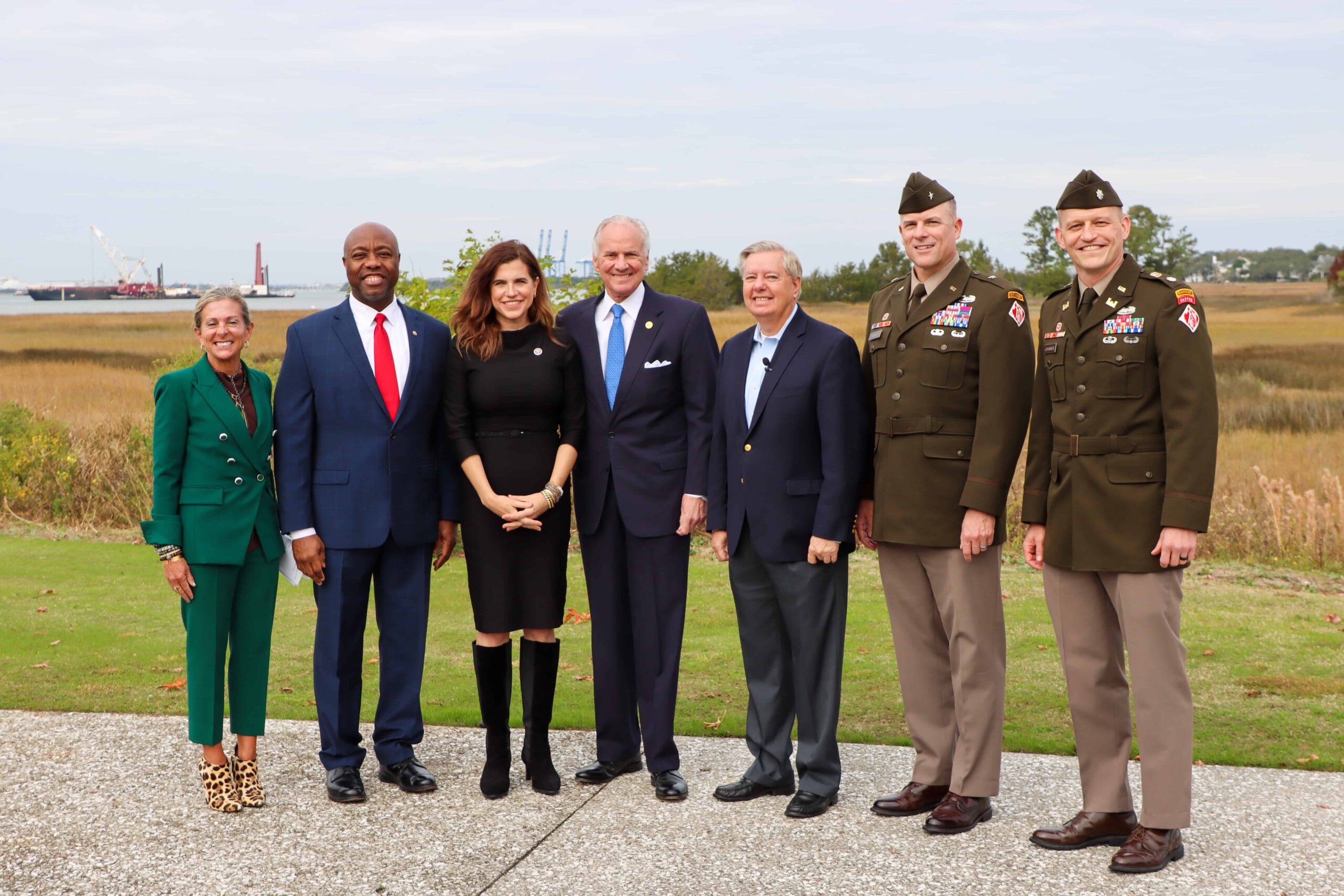
Charleston's Deep Dive: A Monumental Milestone in Maritime History
The global supply chain, an intricate web of logistics and infrastructure, rarely pauses for celebration, yet some moments truly redefine its landscape. Such was the case recently in Charleston, South Carolina, where the arrival of the very first intermodal shipping container at the state-of-the-art Hugh K. Leatherman Terminal marked a pivotal moment. This isn't just a routine delivery; it's a testament to years of strategic planning, monumental engineering, and a clear vision for the future of East Coast shipping. This landmark event, signaling the near completion of the ambitious Charleston Harbor Deepening Project, heralds a new era of capacity, efficiency, and economic vitality for the region and beyond.
A New Era Dawns in Charleston: The First Container's Arrival
In a scene pulsating with the quiet hum of progress, and here comes the first shipping container, making its grand entrance at the Hugh K. Leatherman Terminal. This single box, a symbol of modern commerce, represents a significant leap forward for the South Carolina Ports Authority. Its arrival isn't merely about one piece of cargo; it's a tangible validation of the massive investment and effort poured into the Charleston Harbor Deepening Project. This colossal undertaking is on the cusp of completion, poised to bestow upon Charleston Harbor the coveted title of the deepest harbor on the entire East Coast, boasting an impressive depth of 52 feet.
The implications of this deepened channel are profound. A 52-foot depth allows the Port of Charleston to accommodate the largest container ships currently traversing the oceans, ships that were once limited to only a handful of global ports. These behemoth vessels, capable of carrying tens of thousands of TEUs (Twenty-foot Equivalent Units), translate directly into increased cargo volume, reduced shipping costs per unit, and greater flexibility for global trade routes. This strategic advantage positions Charleston as a crucial gateway for international commerce, enhancing its competitiveness and solidifying its role as an economic engine for the state and the broader Southeast region. The maritime achievement involves an array of specialized vessels, from massive dredges sculpting the seabed to agile tenders and powerful tugs guiding colossal ships, all operated by a dedicated workforce whose expertise makes such an endeavor possible.
The Unsung Heroes: Navigating the Complexities of Container Delivery
While the smooth arrival of a container at a world-class port terminal is a feat of modern engineering, the journey of individual containers to their final destinations can often be a far more personal and challenging saga. Consider, for instance, the scenario of a smaller operation or an individual awaiting a container delivery on less-than-ideal terrain. What seems straightforward on paper can quickly become a complex logistical puzzle. Imagine expecting an 8,000-pound steel box delivered by trailer onto hilly land, possibly wet from recent weather – a common challenge, especially in regions like the Catskills or other mountainous areas.
Experienced truck drivers, often the unsung heroes of the logistics world, can quickly assess the feasibility of a delivery. Hilly, soft, or uneven ground presents significant risks, from trailers getting stuck to containers being unable to reach their intended spot. In such situations, ingenuity and preparation are paramount. Solutions often involve backing the truck as far as safely possible and utilizing robust materials like 6x6 wood blocks to facilitate the container's offloading, sometimes leaving it short of the ultimate desired location. The excitement of receiving your container can quickly be tempered by the realization that it’s not exactly where you wanted it to be. For comprehensive guidance on overcoming these obstacles, refer to our detailed article on Navigating Your First Shipping Container Delivery on Hilly Land.
Practical Tips for Challenging Deliveries:
- Site Assessment: Thoroughly inspect your delivery site. Note slopes, soft spots, overhead obstructions, and access roads.
- Communicate Early: Provide the trucking company and driver with detailed information and even photos/videos of your site in advance.
- Prepare the Ground: If possible, harden soft areas with gravel, compact soil, or lay down temporary mats. Clear any obstacles.
- Have Equipment Ready: For offloading challenges, consider having heavy-duty wood blocks, planks, or even a local forklift service on standby if the driver cannot get onto your property.
- Flexibility: Be prepared for the container to be placed close to, but not exactly on, your preferred spot. Planning for alternative solutions to move it later (e.g., using a specialized container mover) can save significant stress.
Beyond the Box: The Transformative Power of the Shipping Container
The standard shipping container, though humble in appearance, is arguably one of the most significant inventions of the 20th century. For most of us, it's difficult to conceive of a world without these ubiquitous steel boxes on trains, ships, and roads. Yet, before their widespread adoption, global trade was a chaotic, inefficient, and costly affair. Goods were transported in a bewildering array of crates, barrels, boxes, and sacks, each requiring individual handling and custom loading. This fragmented approach drastically slowed down the journey from factory to warehouse to store, limiting how much could be transported at once and driving up costs.
The genius behind the modern shipping container was Malcolm McLean, a visionary trucking company owner who, in the 1950s, observed the inefficiencies firsthand. He envisioned a seamless system where goods could be loaded into a standardized, robust box that could be easily transferred between different modes of transport – land and sea – without needing to be unloaded and reloaded. Working with engineer Keith Tantlinger, McLean patented his design, effectively standardizing global freight. His invention wasn't just about a bigger box; it was about an entire system that unlocked unprecedented levels of efficiency, security, and speed in global commerce. This revolutionary concept paved the way for modern supply chains, enabling globalization as we know it today. To learn more about the remarkable individual who transformed international trade, explore our article on The Genius Behind the Box: Malcolm McLean and Shipping Container History.
Charleston's Future: Deepening Trade, Broadening Horizons
The Port of Charleston's deepening project and the arrival of its first container at the Hugh K. Leatherman Terminal are more than just infrastructure milestones; they are catalysts for future growth. With the ability to handle larger vessels, Charleston significantly boosts its capacity to move goods, fostering economic expansion, attracting new businesses, and creating jobs across diverse sectors, from logistics and manufacturing to retail and technology. This increased competitiveness allows the port to capture a larger share of global cargo traffic, further solidifying its standing as a critical node in the world's trade network. The improved efficiency and expanded capabilities will benefit consumers through potentially lower costs and greater product availability, while businesses will gain from more reliable and diverse shipping options. This strategic investment underscores a long-term commitment to maintaining Charleston's position at the forefront of maritime innovation and economic prosperity.
Conclusion
From the challenging terrain of a single container delivery to the monumental engineering feat of deepening a major harbor, the story of shipping containers is one of relentless innovation and logistical triumph. Charleston's recent milestone – the arrival of its first container at the state-of-the-art Hugh K. Leatherman Terminal – is a powerful reminder of how critical infrastructure development, combined with the foundational brilliance of inventions like the standard shipping container, continues to shape our global economy. As Charleston Harbor earns its bragging rights as the East Coast's deepest, it reinforces the port's pivotal role in global trade, promising a future of deepened commerce, broader horizons, and sustained economic growth for the entire region.
